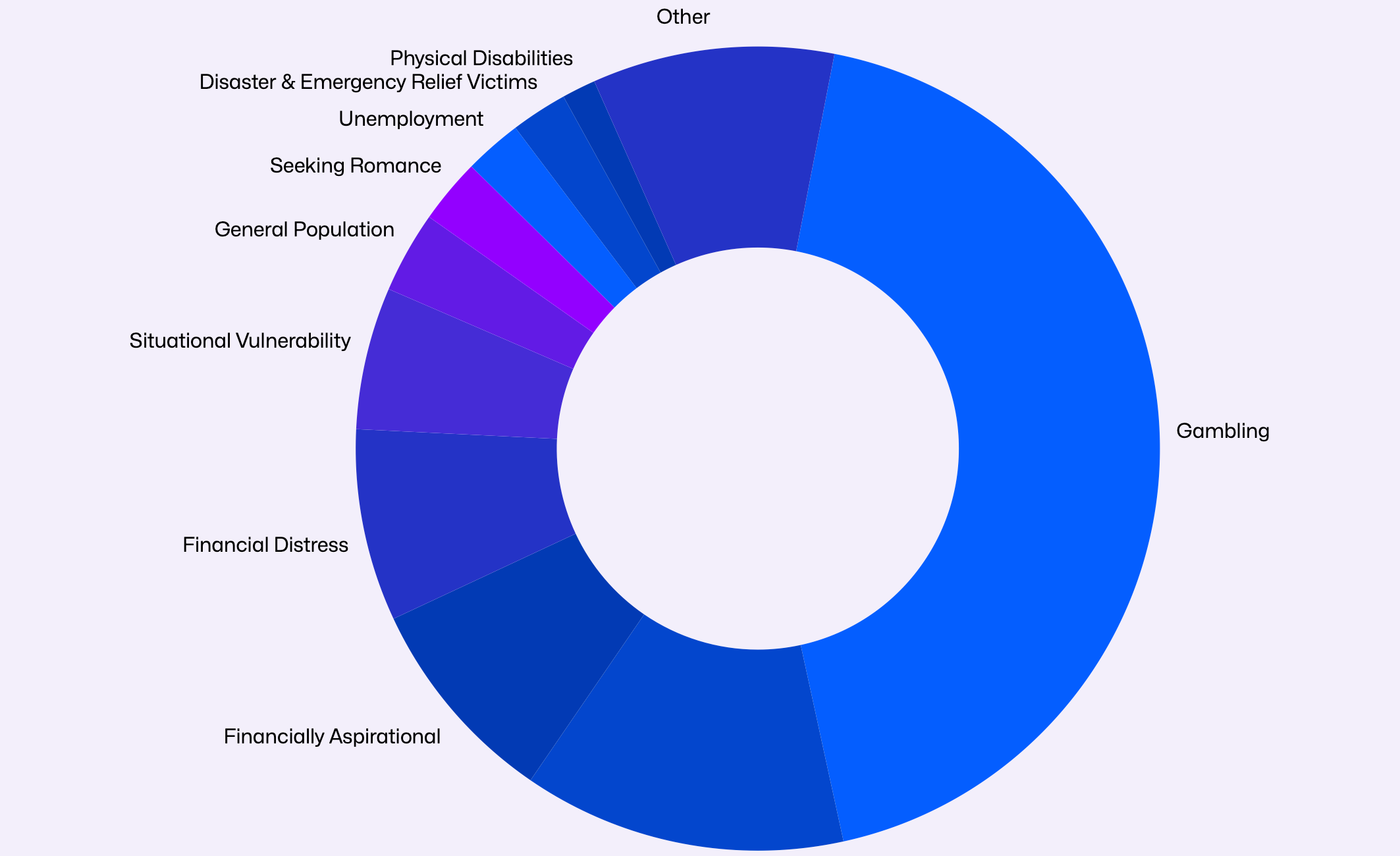
Gambling Content and Adolescent Exposure: What the Data Shows

Analysis of nearly 30 million domain-based signals from the Global Signal Exchange, conducted by OXIL Research, found that scammers primarily flood the internet with high volumes of content targeting the general population, accounting for 34% of total weighted relevance. However, when researchers filtered the data to focus only on the most explicit, highly relevant signals, gambling content dominated at 48.1%, displacing general population content from the top position entirely.
Additionally, unlike broader scam content, gambling-related material is significantly more overt and less linguistically ambiguous, targeting individuals with existing gambling addictions using highly specific and aggressive bait. The research further finds that the linguistic and tactical methods scammers deploy to exploit adults struggling with gambling addictions overlap measurably with those used to target adolescents in the same digital spaces. This suggests scammers appear to be deploying the same hooks to exploit teenage audiences as they do adults with gambling addictions.
This finding is one of six key conclusions from Rethinking Scam Prevention, a report published by Oxford Information Labs (OXIL Research) with support from Google.org, which drew on domain-based signals collected via the Global Signal Exchange.