AI Has Weaponized Translation, Leaving Local Languages Defenseless

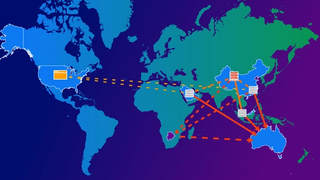
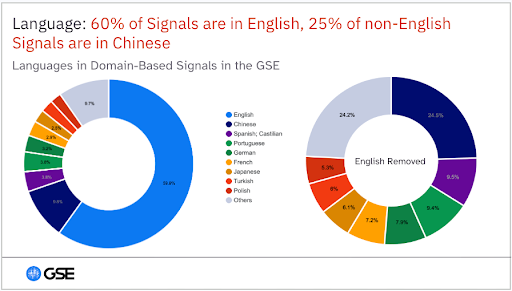
In our provisional analysis of scam geographies, we have found that 60% of signals are in English, and 25% of non-English signals are in Chinese. This headline distribution captures a global footprint, while actionable insights lie in the regional mechanics of how scammers geographically target their victims.
It is notable that we are seeing a similar ‘scattergun vs sniper rifle’ approach to geographic targeting that we observed when analysing the targeting of vulnerable groups. The automation and industrialization of fraud has changed the way that scammers are able to target different geographic regions. There are many geographic regions that were once considered ‘linguistically shielded’ from scams and fraud, such as Estonia.
Estonian is a highly morphologically inflected language which is not globalized. Prior to the democratization of generative artificial intelligence, scammers were reliant on machine translation which used dedicated encoder-decoder architectures.
These produced the obvious non-native grammatical errors that scam and fraud awareness campaigns are based on. In English these could be failure to inflect irregular morphemes (“we have detect suspicious activity on your account”), failure to maintain subject-verb agreement (“your account details needs to be updates”), or article misuse (“kindly access secure server to update your profile”).
Modern scam and fraud infrastructure uses neural machine translation, where the semantic content of language 1 is encoded as a-linguistic, abstract information. The output is produced in language 2 are syntactically flawless and contextually fluent, which means that traditional ‘linguistic shielding’ has been significantly eroded.
Generative artificial intelligence has democratized translation and personalization, and we are seeing evidence of these changes in our data.