How Global Signal Exchange Closes Cybercrime Gaps: Insights from Google EMEA Anti-Scam Summit

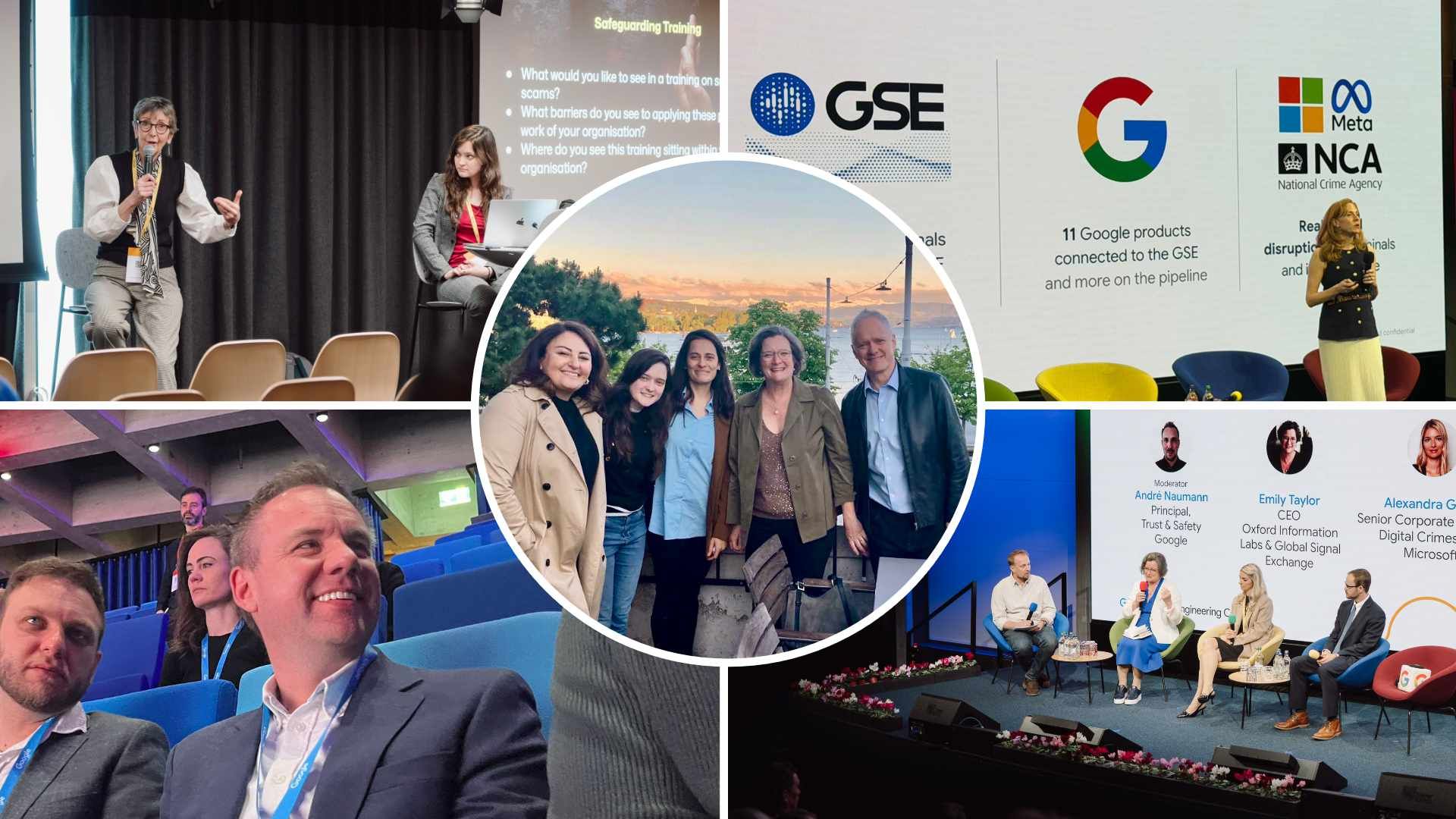
On 13 May 2026, the Global Signal Exchange (GSE) participated in the second EMEA Anti-Scams and Fraud Summit, hosted by the Google Safety Engineering Center (GSEC) in Zurich. The event brought together experts from government, technology, and civil society to address the cross-border challenge of online fraud.
The summit provided an essential venue for aligning industry intelligence and coordinating practical defences against organised criminal networks.The growing role of the GSE as a core defensive tool was highlighted during the keynote addresses.
Karen Courington, Google's VP of Trust & Safety, reinforced this sentiment, explaining that "one of the most effective solutions for cross-sector collaboration is the Global Signal Exchange" and stressed the need to "tackle scams more collectively."
The GSE actively participated in the high-level plenary sessions to show how real-time data sharing translates into rapid enforcement actions, and highlighting the impact of the GSE league tables and interactive GSE Compass querying tool.
Following the main panel, the technical discussion moved into specialised tracks. A technical workshop on the Domain Name System (DNS) and the wider fraud lifecycle was facilitated by the Google Trust & Safety team. Lucien Taylor, Co-Founder and CTO of the GSE, spoke during this session to present the GSE league tables, demonstrating how the they draw upon the GSE’s 1.2 billion threat signals to present a robust view of strengths and weaknesses within the supply chain associated with scam journeys.
During the afternoon breakouts, research colleagues from Oxford Information Labs presented their safeguarding study, Rethinking Scam Prevention: Large-Scale, AI-powered analysis for a Safeguarding Approach. Supported by Google.org, the study utilized AI-powered semantic analysis of nearly 30 million domain-based signals from the GSE to evaluate scammer tactics throughout 2025. The findings challenge standard assumptions by showing that scammers weaponize situational vulnerabilities—such as financial anxiety—rather than static demographics, often relying on high-volume "scattergun" methods. The paper ultimately advocates for an industry transition away from relying solely on individual user awareness toward a systemic, collective safeguarding model.
The clear consensus from the Zurich summit is that cross-sector threat intelligence must drive daily operational action. Amanda Storey, Google's Managing Director of Trust and Safety commented, "Fighting scams requires a united front, and this platform provides exactly that. By sharing threat data cross-sector, we can identify and disrupt scams before they can cause harm."
By expanding real-time data orchestration and building deeper public-private alliances, the GSE network aims to close the persistent communication gaps that cybercriminals exploit. Moving forward, the exchange will continue to scale its technical capabilities to protect users globally