
Is this deal too good to be true?

The American retail event, Black Friday, has become internationally considered the unofficial start of the Christmas shopping season. During this long weekend of sales and promotions, closed-out by the online equivalent Cyber Monday, many people will be looking for a great deal.
We will give some tips on how to protect yourself from Black Friday scams, however, we believe awareness and safeguarding go beyond consumer education. A key goal of both OXIL and the GSE is shifting the burden of scam prevention away from victims, and towards the organisations better placed to act on threat signals. This is especially pertinent this week, as it is both International Fraud Awareness Week, and National Safeguarding Adults Week.
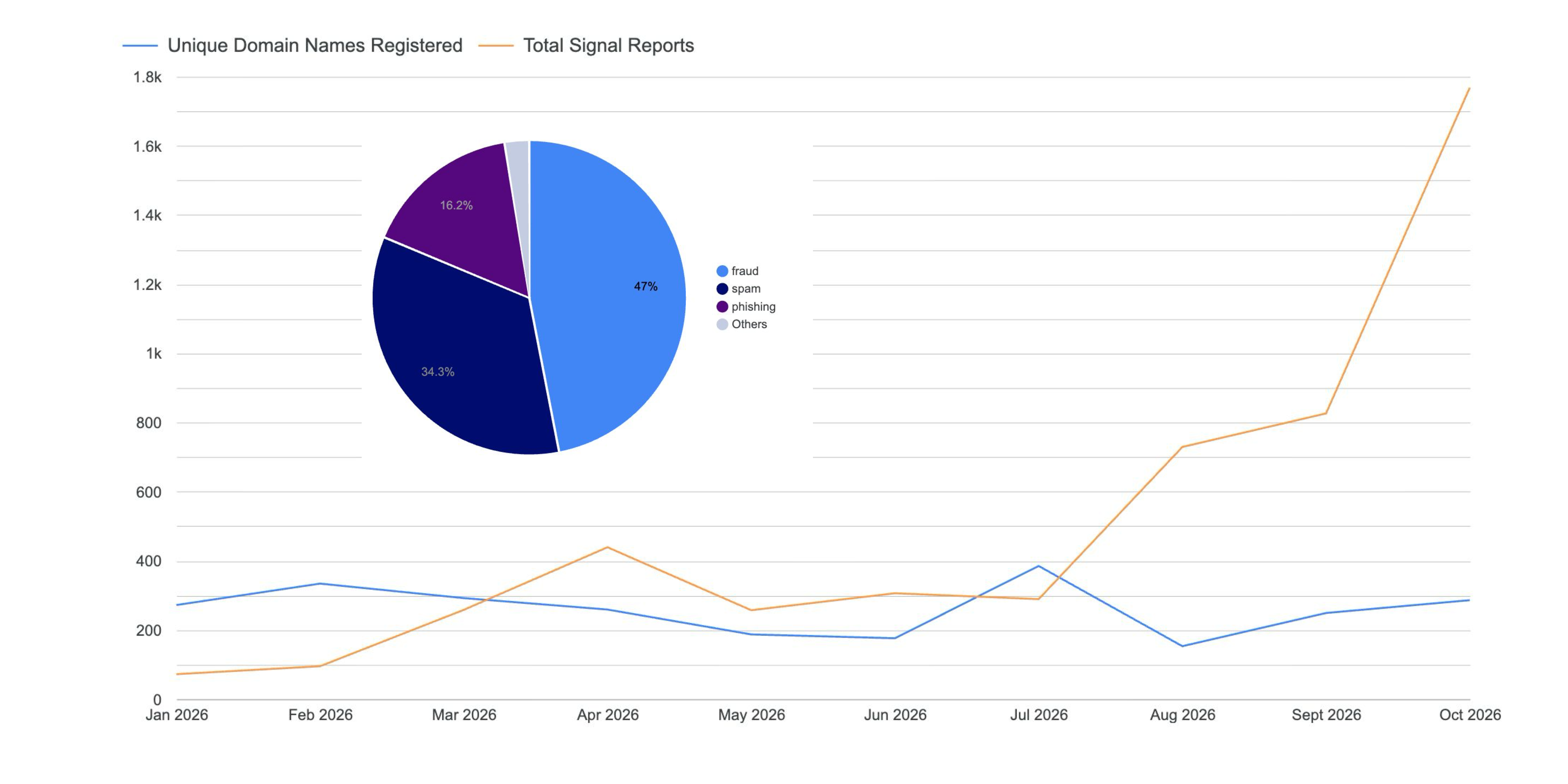
Any digital event which involves large exchanges of money across the internet is at risk of abuse, so it is no surprise that the orange line, representing reports of Black Friday-related scams in the GSE, spikes dramatically by 114% between September and October. However, the blue line, showing the point at which the domain names were actually registered, does not follow the same trend, and scammers have been preparing and using this infrastructure throughout the year.
Domain age is used by security scanners as a simple trust check, so scammers often leave a domain inactive to ‘age it’ for months before someone clicks ‘buy’. Alternatively they may be re-using the infrastructure to run seasonal fake retail campaigns year-round. This all leaves a trace, but without compounding evidence of crime, it can be challenging for organisations to identify or act on this. This is why signal-sharing is key; the more we know about a scam and its supply chain elements, the earlier and more confidently we can disrupt and/ or dismantle the infrastructure facilitating the scam. We cannot continue to blame individual consumers for split-second decisions when organisations have had months to act.
If you are still wondering how to protect yourself, the National Cyber Security Centre’s advice is to check the shop’s legitimacy, never pay by direct bank transfer and be aware of delivery scams if you are expecting parcels. To protect yourself in advance in the case of compromise, secure important online accounts with 2-step verification. The BBC also published advice urging shoppers to be wary of being rushed by limited-time promotions and pop-up countdown timers.