Highlights from the GSE's First Webinar
Over three months, cyber security experts in Belgium sent Meta 840 ads they were sure were scams. About a quarter were ads Meta had already taken down, which showed its own checks were on the right track. Nearly half helped Meta find and remove scam ads it would not otherwise have caught.
That was one of the stories shared at the Global Signal Exchange's first webinar in September. We help companies, governments and police share information about scams. In under an hour, members showed what that sharing looks like in practice.
No one sees the whole scam
The same idea came up again and again: no single company can see a whole scam. Meta sees the ads on its own platforms. A cyber security team in Belgium sees what happens after someone clicks. Put the two together and ads that looked harmless turn out to be scams.
Google made the same point. If someone sends Google a list of email addresses, those accounts can look completely normal on Google's side. What makes the difference is knowing why they were flagged and what they are doing elsewhere. As Mark Robertshaw, who ran the session, put it: "context is everything."
Amazon said that sometimes the biggest help is simply knowing who to contact. When a scam crosses from one company to another, finding the right person quickly can be the hardest part.
From 87 email addresses to arrests
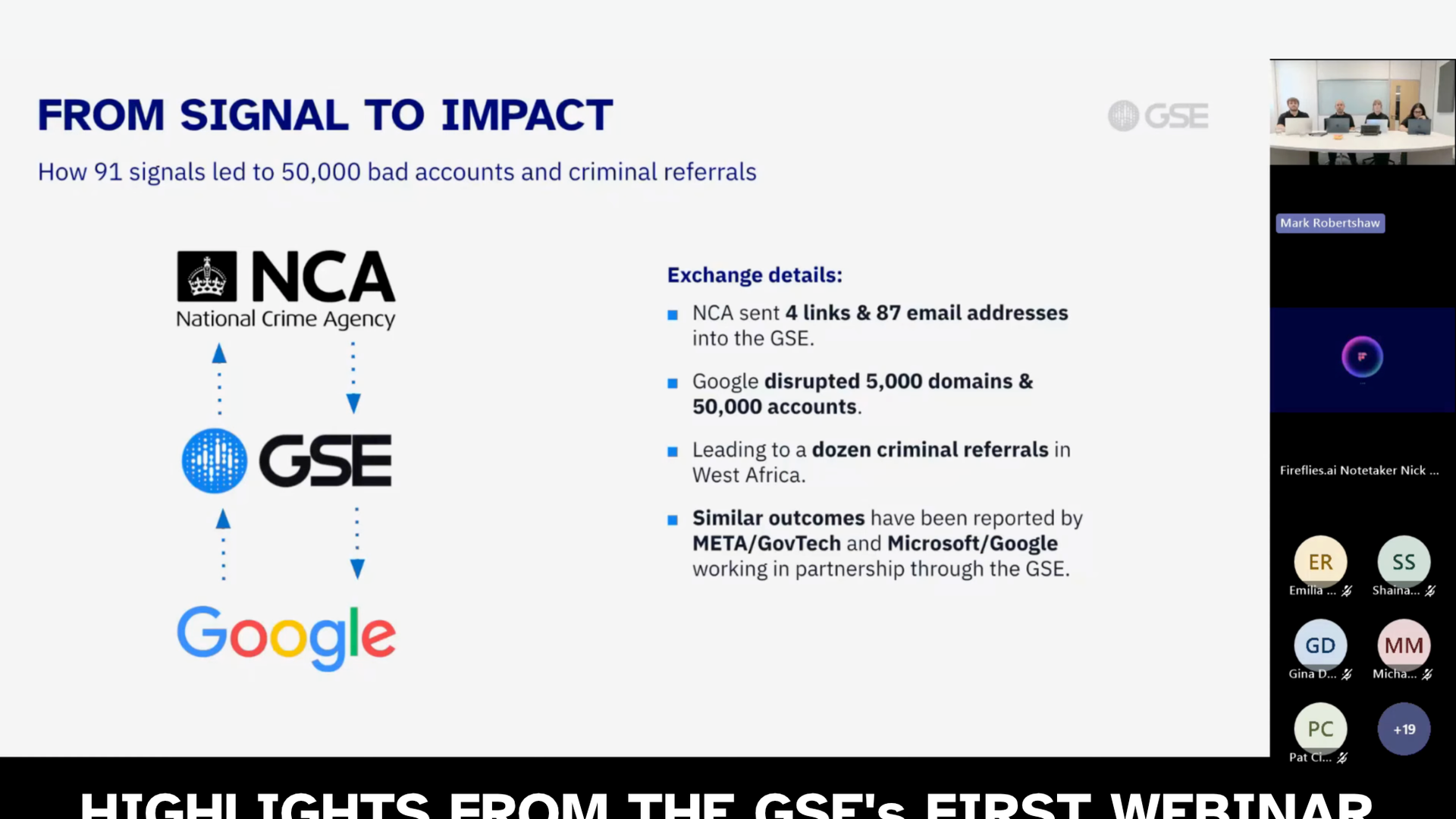
Mark also gave an update on one of the GSE's best-known cases. Earlier this year, the UK's National Crime Agency shared 87 email addresses and four links with Google through the GSE. Google used them to shut down 5,000 websites and 50,000 accounts linked to a scam gang in West Africa. Mark told the webinar that the case has now led to arrests.
Racing the scammers
Scams now happen in hours or even minutes. A fake website can go up, take people's money and disappear before anyone reports it.
So the GSE has changed how it shares scam reports. Before, members had to keep checking for new ones. Now reports go straight to them, usually in under a second. That means a bank or a tech company can block a scam website almost as soon as someone flags it.
The GSE is also starting to show where each scam is aimed. A fake British bank website, for example, would be marked as targeting people in the UK. That helps each country see the scams heading its way.
In 20 months, the GSE has grown to about 140 organisations, including Google, Meta, Microsoft and Amazon, and more than 1.5 billion scam reports have been shared.
Join the next one
The GSE plans to hold these webinars every few months. Each one brings news about the platform and real stories from the people using it to stop scams.
The next webinar is on January 21st.